Neighborhood News: North Park, the “other Swedish community,” and so much more!
As a third-generation Swede, it’s been my pleasure to explore areas of Chicago celebrating my heritage. While most people know the Andersonville community as “the Swedish community,” it’s North Park, on the Northwest Side of the city, that we most often visit.
Why? Better parking, honestly, for our annual trip to Tre Kroner. Secondly, for the many options for shopping, which always includes a trip to the Sweden Shop down the street.
Where is North Park?
According to Wikipedia sources, North Park is bordered by the North Shore Channel on the east, the Chicago River’s North Branch and Foster Avenue on the south, and reaches as far as Cicero Avenue on the west and Devon Avenue on the north. To its north is the Chicago city limit and the suburb of Lincolnwood.
Generally considered a safe, quiet, family-friendly and diverse neighborhood on the Far North Side of Chicago, North Park is home to North Park University and Northeastern Illinois University, and the scenic North Park Village Nature Center.
The area also hosts a local Yeshiva, the Felician Sisters headquarters, and nearby WTTW public television studios.
History
In the late 1800s, Swedish immigrants settled in the area, then known as Jefferson Township and not a part of Chicago. Nursery owner Pehr Samuel Petersen (1830-1903)a Swedish-American immigrant, provided local land and trees.
The neighborhood grew around its Swedish immigrant roots, and later became an enclave for Orthodox Jews as well. The territory was officially annexed into the City of Chicago in 1889.
North Park University relocated from Minneapolis to the neighborhood in 1894, completing its iconic Old Main building whose cupola, interestingly, long served as a landmark for aviators.
Many decades later, Northeastern Illinois University opened its campus in the western part of the neighborhood in 1961.
From Tuberculosis Sanitarium to North Park Village
In 1915, the city built the massive 160-acre Municipal Tuberculosis Sanitarium (MTS,) designed by architect Ossian Simonds as a healing “country-like” retreat, on land donated by Pehr Peterson. Chicago Public Library blogs recall that at the time, fresh air and open space were considered important factors for treating tuberculosis, so the land was well-suited to its new use.
By the 1970s, medical advances meant that declining numbers of people needed to visit sanitariums for treatment, and the MTS closed at the end of 1974.
Shortly before that, in November 1973, developer Harry Chaddick proposed converting the MTS site to a shopping complex and high rise apartments. This plan was strongly opposed by many area residents and local groups, including the North River Commission, an umbrella organization for local community groups that was founded in 1962. With the support of the North River Commission and other local groups, the North River Coalition to Save the MTS Site was created.
These neighborhood activists blocked high-rise commercial development. The grounds became North Park Village, featuring senior housing, park facilities, a gymnastics center, and a 46-acre nature center.
Today
Those grounds are also home to the Peterson Park Fieldhouse, named for Peterson, which was originally built as the Laboratory Building of the Municipal Tuberculosis Sanitarium.
A groundbreaking for Pehr Peterson Park was held in 1977 on the former MTS grounds, and the area was officially given the name North Park Village in February 1979. In the next decade, two senior housing complexes and a health center opened, programs and events were held at the Nature Center, and plans began to renovate the MTS theater building.
While keeping traces of its Nordic roots, the commercial strips along Foster Avenue and surrounding blocks reflect a diverse global community with Middle Eastern, South Asian, East Asian, and Latin American influences. And the stretch of Foster Avenue bordering North Park University is dotted with bustling international restaurants — try hard-to-find specialties from Vietnam, India, the Philippines, Mexico, Korea, the Middle East, and beyond.
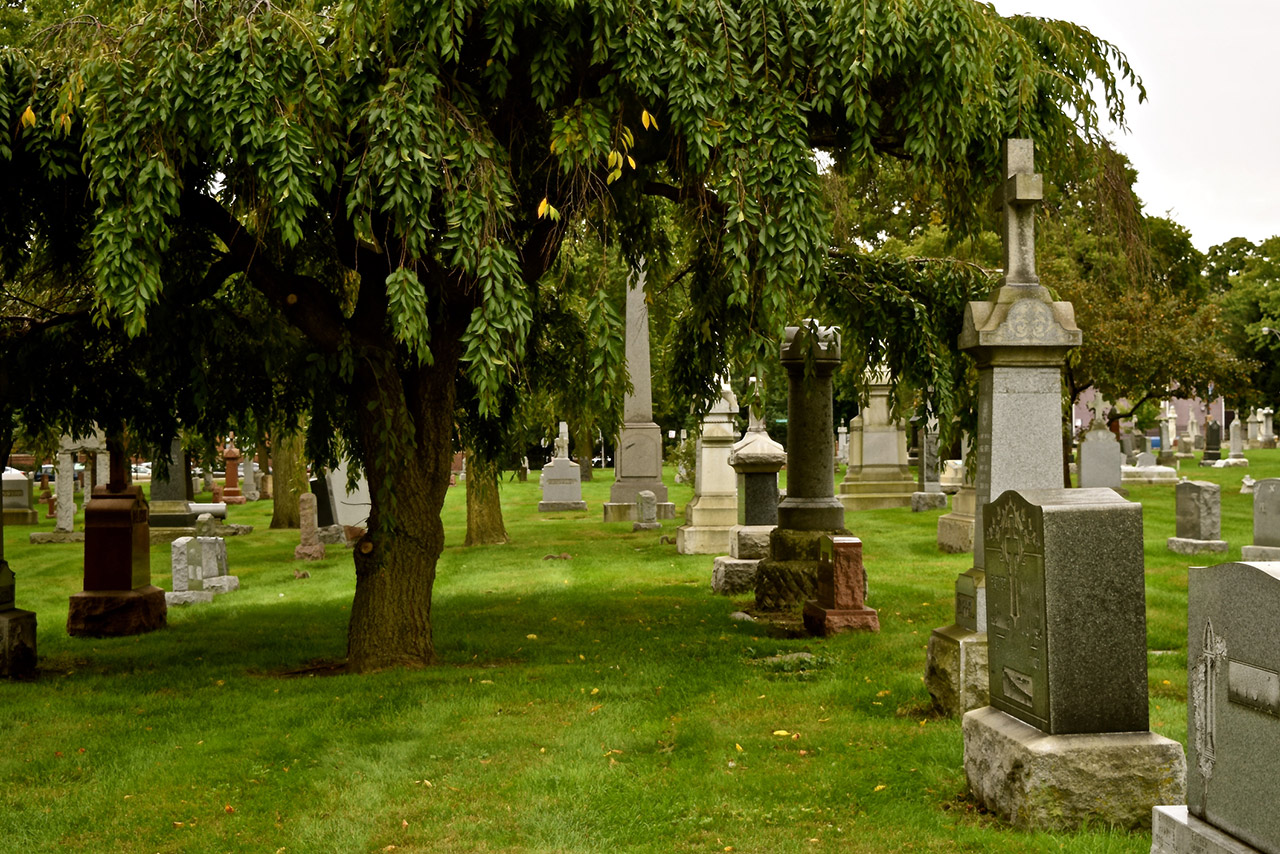
And as Choose Chicago notes, one of the most fascinating spots in North Park is the Bohemian National Cemetery. The sprawling Czech cemetery, a historic landmark, is known for its elaborate entrance gates, unique grave markers, and fascinating history.
Alison Moran-Powers and Dean’s Team Chicago