Emergency Tips Every Homeowner Needs to Know About

A woman checks the fire extinguisher expiration date at home

Owning and maintaining a home doesn’t come with an instruction manual, though it would be great if it did. After you’ve found the home you love and moved in, the real fun starts.

But sometimes the fun can be rudely interrupted by certain scenarios that can put the home – and even you and your family – at risk.

Here are a few things all homeowners should know about in order to avert an emergency in the house.

Know Where the Shut-Off Valve is

Whether the toilet is overflowing, or the pipes are frozen, the water supply to the house needs to be shut off immediately. You should probably shut the water off completely if you’re going on vacation for more than a couple of days.

You’ll need to know exactly where the shut-off valve is in order for you to cut off the water supply. While it may typically be in the basement, it can also be located in an underground utility box or outside wall in warmer climates.

Once you’ve located it, make sure that it works properly. It should be turned clockwise to stop the water flow into the house. A good idea would be to test it two or three times after you first move into the home to make sure it actually works.

In the case of a burst pipe either under a sink or beside the toilet, you should first shut the valve off directly at these sites to minimize damage in those immediate areas.

Know How to Stop an Overflowing Toilet

Aside from this being pretty nasty, an overflowing toilet can cause serious water damage to the immediate surroundings and the structures below. Usually these scenarios happen when the bowl is slow to drain and clean water from the tank rushes in too fast.

If the bowl is filling up, don’t run away. Instead, immediately lift the top of the tank, grab the black rubber float, and pull it up. This will close the valve that allow the clean water in the bowl, which should ideally give you enough time to shut the water source off.

Label Your Circuit Breakers

You’ll definitely need to fiddle with the breakers on occasion. As such, it’ll be a lot more helpful if you know exactly which breakers work specific outlets, light fixtures, electronics, and appliances.

First of all, you need to know exactly where your breaker box is. Once you’ve found it (usually in some sort of utility space like the laundry room or storage room), label the breakers accordingly. You’re probably going to need some help in this department, so make sure you’ve got your partner or a pal to help identify what fixtures each breaker controls.

Start by turning them all off, then test each one at a time. Once you’ve got this info, write it down directly beside each switch. Be sure to identify where the main switch is too, which shuts off the power to the entire house.

Know How to Operate a Fire Extinguisher

Many times a house fire can be stopped right in its tracks with the use of a fire extinguisher. Just make sure your home is equipped with one.

To effectively operate this life-saving piece of equipment, it might help to write down clear, simple instructions on the actual canister. The first thing you need to do is pull the pin for it to be ready. After you aim the nozzle at the fire, squeeze the trigger and spray the agent from side to side to extinguish the fire.

Remember that the average fire extinguisher only consists of approximately 8 seconds of fire-squelching agent in it, so use this tool wisely.

Keep an Emergency Kit Handy in the Home

Certain emergencies may force you to remain in your home for a long time – perhaps even days. And many times the conditions aren’t exactly comfortable or safe. Perhaps your area has been caught in a massive snowstorm that has blocked you in and knocked the power out. Or perhaps your home is the victim of destruction from a hurricane or earthquake.

Whatever the situation is, you should be prepared for anything and everything, and that means having a disaster kit readily available. Consider adding the following items to this kit:

  • Water (about one gallon of water per person per day for a week)
  • Food (non-perishable)
  • Radio
  • Flashlight
  • Batteries
  • First-aid kit
  • Blankets
  • Whistle to signal for help
  • Cell phone with power banks for charging

If it’s within your budget, you may even consider buying a generator that will be able to power up some of the more necessary appliances, like light fixtures, a stove, or space heaters.

You can never be over-prepared for an emergency. Taking the time and effort to prepare your home before disaster strikes can save both the home itself, and your family.

THIS WEEKEND IN CHICAGO – Passing Time Awaiting Arrival of Halloween!

Vector illustration of A collection of vintage style halloween characters including a ghost, pumpkin and witch

Another October weekend is upon us, and before you know it, we’ll be celebrating Halloween!  Until then, your choices for this weekend vary from city tours to taste tests to Halloween-themed events.

For one October weekend only, the Chicago Architecture Center proudly hosts Open House Chicago in various venues throughout Chicago this weekend.  This is a free annual festival where attendees have the chance to tour and go behind the scenes of over 170 architectural wonders in 20+ neighborhoods.  Plus, new additions have been added this year like the Chicago Shakespeare Theatre, the Pullman National Historical Park, and many more.  You’ll also find tips and itineraries for exploring shopping, dining, and other attractions in each neighborhood!

Known as the Superbowl of Wine, WineRival returns to Venue West (221 N. Paulina St.) on the Near West Side this Sunday (5:00 p.m.-9:30 p.m.).  To start things off, guests can sample dozens of the world’s best wineries and fill-up on endless bites at the free-range Tailgate Tasting event.  Then, competing world-class sommeliers face off in a six-round challenge of blind tastings which are judged by a panel of wine professionals.  The winner of this event will receive $25,000 in cash with the runner-up receiving $3,000, and the other two final contestants receiving $1,000.  Best of all, the competition is open to everyone and anyone!

Come and partake in Chicago’s 10th Bloody Mary Fest this Sunday (8:30 a.m.-4:00 p.m.) at Theatre on the Lake (2401 N. Lake Shore Dr.) in the Lincoln Park neighborhood.  This all-day celebration offers guests the chance to sample a collection of the finest Bloody Mary cocktails then voting who should be crowned Chicago’s Best Bloody Mary.  In addition, this fest features an artisan market, demonstrations, specialty brunch-themed cocktails, craft beer, brunch bites, lawn games, and much more!

With Halloween quickly approaching, there’s no better time than now to begin getting into the spirit of the season at the following events:

Rizzo’s Bar & Inn (3658 N. Clark St.) in the Wrigleyville neighborhood brings you Sweet Dreams The Halloween Experience now through October 29th from 1:00 p.m. to 11:00 p.m. on Saturdays and Sundays.  This one-of-a-kind, massive, and twisted Halloween experience brings the nightmare to life by producing some of the most epic Halloween scenes from 20 classic horror movies such as Elm Street, Silent Hill, Candy Man, Killer Klowns, and others.  In fact, don’t be surprised if you run into Freddy, Jason, Leatherface, or IT!  Plus, your ticket includes one complimentary RTD cocktail or domestic draft upon entry.  There’s even a specialty drink menu with discounted pricing available.

Ranked as one of the Most Haunted Hotels in America, the Congress Plaza Hotel (520 S. Michigan Ave.) in the South Loop brings you The Séance Experience this Saturday (7 p.m.-8 p.m. or 9 p.m.-10 p.m.).  The séances will be held in an area of the hotel not usually opened to the public and are authentically re-created exactly as conducted in the 1800’s.  Noted ghostly sightings of former hotel residents include Al Capone, Teddy Roosevelt, and Harry Houdini among others.  Will you walk away from this classic Victorian Era séance having seen dead people?

Sue Moss and Dean’s Team Chicago

Neighborhood News: Strolling the history of Chicago’s Riverwalk

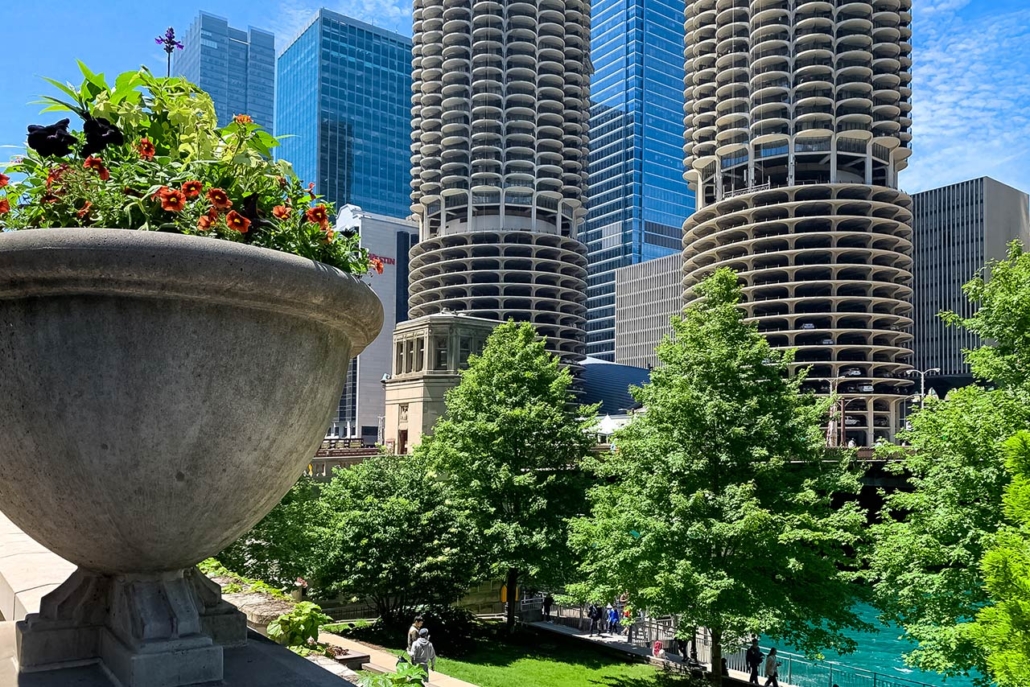
Summer in Chicago with flowers and greenery joining the architecture, Chicago River and diverse crowds

It’s one of the prettiest walks you’ll ever take…strolling on Wacker Drive on the south bank of the main branch of the Chicago River, extending from Lake Michigan and DuSable Lake Shore Drive westward to Lake Street. The Chicago Riverwalkis home to restaurants, bars, cafes, small parks, gardens, boat and kayak rentals, a Vietnam War memorial, public art, museums, outdoor wineries and spaces to enjoy Chicago at its best.

Public Art at the MART

Public art is on show throughout the pedestrian trail. ButArt on the MART is perhaps the Riverwalk’s most famous work. As Choose Chicago tells it, this is the largest video-projection art installation in the world, taking up approximately 2.5 acres of theMART’s river-facing façade. Curated video art can be viewed Wednesdays through Sundays, from March through December, 7:15pm — 9:15pm.

Take, for example, The Chicago Architecture Center, located just off the Chicago Riverwalk at One Illinois Center. As Choose Chicago notes, the building was designed by modernist Ludwig Mies van der Rohe. The CAC is “a gateway to discovering Chicago’s architectural legacy.” The center offers over 85 docent-led tours, as well as exciting interactive exhibits, including the engaging Skyscraper Gallery and Building Tall exhibit.

They also mention the five-story McCormick Bridgehouse & Chicago River Museum celebrates Chicago’s famed moveable bridges and gives you the opportunity to peek inside a historic landmark bridgehouse. At river level, you can view the massive gears that move Chicago’s famous bridges. 

From Marshy Swamp to Urban Oasis

According to Chicago.gov, the Riverwalk started life as a meandering marshy stream. Chicago’s phenomenal growth into a major urban center is due, in large part, to its strategic location on the Chicago River and Lake Michigan. 

Following the famed reversal of the river, in which the city reversed the flow of the Main Branch and South Branch to improve sanitation, architect and urban planner Daniel Burnham’s 1909 Plan of Chicago introduced a new civic vision of riverside promenades with the addition of the Wacker Drive viaduct. The goal of embracing the river as a recreational amenity seemed impossible at the time, given the river’s high levels of pollution. 

The first installment didn’t happen until the 1970’s.  The Riverwalk Esplanade between Lake Shore Drive and Michigan Avenue was originally dedicated as park to the City in 1972 from the Illinois Central Railroad, together with a plat of subdivision to create Wacker Drive as part of the ‘Rails to Trails’ program.

As Chicago.gov explains, the Riverwalk design and engineering began as part of the design of the Wacker Drive Reconstruction project in the 1990’s. The intention of the Riverwalk Project was to complement the new roadway and bring residents and visitors down to the river level. The Vietnam Veterans Memorial originally was located in a median on Upper Wacker Drive.  This portion of the roadway was reconfigured and the memorial was relocated between State Street and Wabash.  The memorial was dedicated on Veterans Day 2005.  The underbridge connections at Michigan and Wabash were completed in 2009.  In addition to reconfiguring the roadway, the City of Chicago formally redefined the navigational channel of the Main Branch of the Chicago River.  Working with The Volpe Institute and waterway stakeholders, including Friends of the River, the United States Coast Guard, Illinois Department of Natural Resources, tour boat companies and others, the build-out limits were established: 20’ beneath each bridge, 25’ between each bridge and 50’ between Franklin and Lake Streets.  

That’s Not All, Folks!!

But that’s not the end of improvement or expansion. As Wikipedia sources note, the Riverwalk’s final extension will be beyond Wolf Point Towers, northward to the planned Bally’s Casino (now located temporarily in the former Medinah Temple) near the intersection of Chicago Avenue and Halsted Street.

Fall Fest on the Riverwalk

The best way to experience the beauty of the fall season, with the Chicago River as the backdrop, is at the Island Party Hut Fall Fest on the Chicago Riverwalk on Saturdays through October 28.

According to Chicago on the Cheap, the Fall Fest features autumn festivities like hay rides on the river, pumpkin patches and eating apple cider donuts along the Riverwalk. The Fall Fest will host live music and serve fall-themed cocktails and photo ops. For more information, click here.

Alison Moran-Powers and Dean’s Team Chicago

Restaurant Review: Lincoln Park’s El tragón TAQUERIA elevates gas station home to new heights

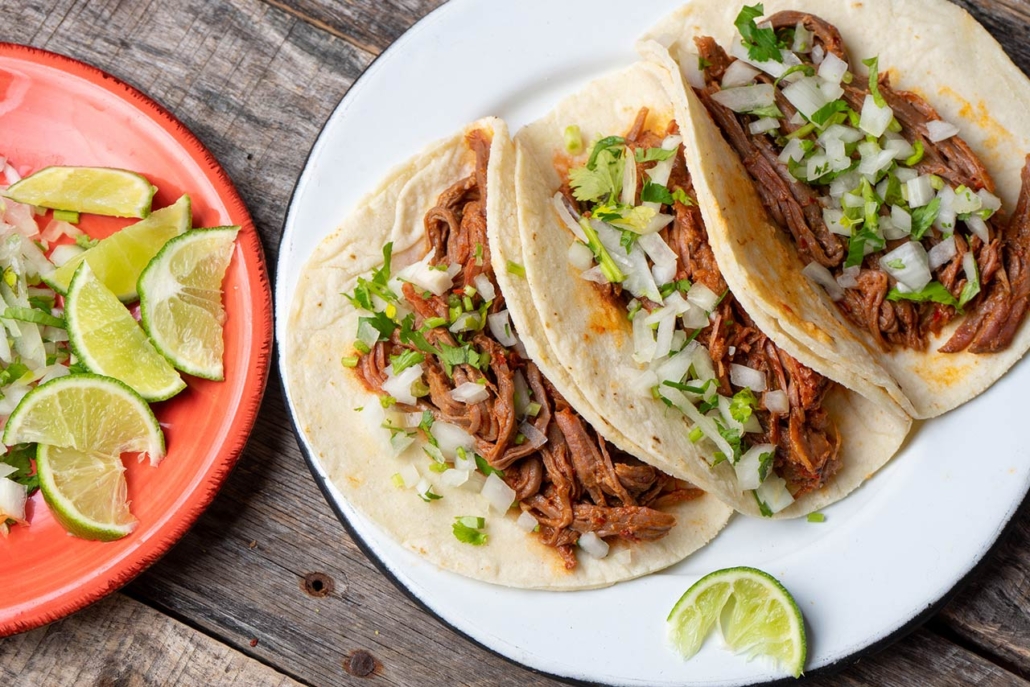
Traditional Mexican beef barbacoa tacos

I started off trying to find the best recommendation for your next Taco Tuesday. What I found was that sometimes, the most delicious food can come out of surprising places…a push cart in Pilsen, for example, a bakery in Logan Square, or a backyard smoker grill in Uptown. On Chicago’s North Side, delicious tacos and other taqueria specialties can be found at  El tragón TAQUERIA, located at the Gas Station Plaza in Lincoln Park!

The owners, according to their website, were inspired by the small street taquerias in the Highlands Region of the state of Jalisco, Mexico; where all the tacos and salsas are fresh and made from scratch everyday.  

El Tragon Taqueria’s taco menu blends fresh, grilled meats and vegetables with tangy, house-made sauces. Their ASADA is a grilled skirt steak served with onions and cilantro. CHICKEN AL PASTOR  features marinated chicken tights with their house-made pastor rub. BISTEC has ribeye, crispy cheese, grilled green onions and cilantro. QUESABIRRIA (CRISPY-CHEESE TACO) features slow-braised beef and melted cheese.

However, tacos aren’t the only thing they serve. AL PASTOR BURRITO has pork marinated in spices, grilled pineapple, rice, beans, lettuce, pico de gallo and sour cream. VEGGIE BURRITO is prepared with mushrooms, bell peppers, onions, rice, beans, lettuce, pico de gallo, avocado, and cotija cheese. Burritos also come in Asada (beef) and Pollo (chicken).MY MOM’S CHILAQUILES has tortilla chips, salsa, and queso.

Asa side dish, you can’t beat ELOTITO, the street corn dish, served with cheese, cream chili pepper, and lime.

Reviews were very nearly perfect:

“El Tragon Taqueria is a hidden gem located by a gas station off Division & Halsted,” wrote one on Restaurant Guru. “The food is absolutely delicious, and their quesabirria is a standout dish. The flavors are rich, the meat is tender, and the tortillas are perfectly crispy and cheesy. A must-visit for any taco enthusiast seeking a mouthwatering experience. In addition to their delectable food, they offer friendly and quick service, ensuring a delightful dining experience from start to finish.”

“Just as you walk in you can smell the deliciousness of the food you are going to have,” a Google reviewer wrote. “The restaurant is very authentic inside and the food is as well. The Elote was super spicy but tasted amazing. And the birria taco was incredible. Super nice staff and service was great. The place feels very homey with all of the family pictures on the walls. Would definitely recommend.”

El tragón TAQUERIA is located at Gas Station Plaza, 1234 N. Halsted Street, UNIT C Mobil. Their hours are Monday-Friday, 10am–8pm, and Saturday, 10am–5pm. They are closed Sunday. For more information and to order online, click here.

Alison Moran-Powers and Dean’s Team Chicago

Chicago Home and Lifestyles – Keep those emotions in check!

Graphic of a cheerful woman balancing on a smiling face while juggling emotional faces

The last 3 years have certainly been difficult for so many of us to deal with. From feeling isolated, afraid, and generally overwhelmed, many of us are finding it a struggle to keep up. We are dealing with many emotions even though for most of us life has, more or less, returned to normal. 

New research is tackling the subject of emotional dysregulation, which refers to the inability to keep your emotions in check. Confronting your emotions isn’t easy, but not dealing with them can certainly be detrimental to your mental health. Remember, our bodies and brains aren’t perfect, and this happens to everyone!

So, next time you feel like your emotions are getting the best of you, keep these hints in mind to help process those feelings:

Be aware of how you feel physically. When my emotions are getting high, I often feel flushed. When I notice my body reacting that way, I stop and think. Taking a minute to figure out what is going on can realy go a long way.

Ask yourself if the feeling is justified. Sometimes it is! But often the reaction comes from somewhere else entirely. Perhaps you are feeling anxious or frustrated. If the feeling does not seem justified, try to think of how you would help a friend in the same situation. 

Step away from the situation. Sometimes the best thing you can do is remove yourself from a triggering situation. Then, you can more rationally plan your next step. 

Don’t be so hard on yourself. Exercise some self-care when you feel yourself getting overwhelmed. Take a walk, listen to some music or play with your pet. Show yourself some self-compassion.  

Overall, what we can take from this is that we all have tough emotions and sometimes it’s hard to regulate them! We’ve been on an emotional rollercoaster for the last few years, and that can take a toll on anyone’s mental health. The best way to deal is to realize when and why it happens. Sometimes just admitting that these emotions are real and normal is half the battle. 

Kathleen Weaver-Zech and Dean’s Team Chicago

Using Price-Per-Square-Foot Analysis to Price a Home

Close up of a mans hand with a pencil calculating with a small home model

Listing your home at the right price is critical. Pricing too high or too low can keep your home on the market a lot longer than you’d like, and can even leave thousands of dollars on the table.

Comparing what other similar homes in the neighborhood recently sold for is the more popular way of coming up with an accurate listing price in residential real estate; however, there are other ways to measure value.

One way that some sellers and their agents price homes for the market is by using a price-per-square-foot analysis of a subject property to compare to. While this shouldn’t be the sole method of pricing a listing, it can help somewhat. While many in the industry discard this method, it can still help narrow down an accurate listing price. In fact, professional appraisers and commercial brokers still continue to use these calculations, so there’s still got to be some merit to it.

The key to using a price-per-square-foot analysis is to follow specific guidelines.

How the Price Per Square Foot is Calculated

A home’s price per square foot is determined by dividing the subject property’s price by its square footage. For instance, a 1,500 square-foot-home that’s priced at $300,000 would have a price-per-square-foot calculation of $200 ($300,000 ÷ 1,500 s.f.). Calculating the price of a home can be done by multiplying the price per square foot by the home’s square footage.

Of course, this calculation on its own is very simplistic. Many issues can be raised by this simple calculation alone, as these numbers are subject to error. For instance, how accurate is the actual square footage of the home? How was this actually calculated? Was it even measured to ANSI standards, or was it done using old-school measuring tape?

No matter what method was used to calculate the subject home’s square footage, it needs to be very accurate. Not only that, it needs to be consistent with the method used to measure other comparable homes in the area. If not, one of the variables in the price-per-square-foot calculation could very well be highly inaccurate. Only after very precise numbers are obtained can the price-per-square-foot analysis work.

Follow the 10% Rule

A price-per-square-foot comparison method needs to stick to the 10% rule in order to be accurate. Basically, this rule involves ensuring that the improvements to the subject home along with the square footage of the land it sits on are within a 10% range of those of the subject property that is being evaluated. For instance, for a 1,500-square-foot home on a 5,000-square-foot lot, comparable sales should be based on homes within the 1,350 to 1,650-square-foot range (1,500 +/- 10%), and lot sizes must be within the 4,500 to 5,500-square-foot range range (5,000 +/- 10%).

Tread Lightly With Improvements

A home that’s been renovated from top to bottom in high-end materials is often assumed to be worth a lot more per square foot than a home that is in dire need of some TLC. While this is true to some degree, improvements might not necessarily have as much of an effect on the price-per-square-foot, depending on the buyer.

For instance, a home with brand new porcelain tiles might not be worth much to a buyer who has intentions of ripping it all out and replacing it with wide-plank oak hardwood flooring. In many circumstances, improvements do – and should – play a role in establishing an accurate price based on a price-per-square-foot analysis, but exceptions to the rule should be accounted for.

Any upgrades that have added useable square footage to a home will typically increase the value of the home. For instance, if a 2-bedroom, 1-bathroom house is converted into a 3-bedroom, 2-bathroom home, such improvements will usually increase the property’s value.

The Bottom Line

The price-per-square-foot analysis can certainly be helpful in coming up with a listing price for your home, but it should definitely not be the only method used. The key to accurate pricing is to use a comparative analysis of similar properties in the area that have sold no further back than two or three months. Actual sale prices are factual, and already involve all of the variables that need to be considered when coming up with an accurate listing price, including size, location, finishes, condition, and so forth.

There’s also something to be said about an in-depth knowledge of the local market, knowing what buyers in the area are looking for, and understanding buyer and seller motivation. The price-per-square-foot analysis only works with a solid understanding of the housing market of the area in question. Experienced real estate agents will be able to pair their knowledge of the market with comparables and a price-per-square-foot analysis to come up with the right price that will garner the most attention from interested buyers.

THIS WEEKEND IN CHICAGO – Cheers to a Relaxing October Weekend!

Cheers to beer vector graphic

Welcome one and all to the first full weekend of October 2023, which means the Holiday Season is quickly approaching!  But before that season is in full swing, let’s just relax and enjoy what this weekend has to offer us.  Who’s with me?

With the cooler fall breezes expected this weekend, it’s a perfect time to celebrate the 7th annual Lincoln Park Wine Fest at Jonquil Park (1001 W. Wrightwood Ave.) in the Lincoln Park neighborhood this Saturday and Sunday.  This open-air market features wine and food pavilions spread across the park offering scores of varietal wines from around the world along with sommeliers and brand ambassadors coaching you through a two-hour tasting session.  A general admission ticket gets you a sample of 12 varietals of wine with a commemorative tasting glass, while a VIP ticket gets you an expanded tasting that includes five additional specialty wines, a commemorative glass, a private seating area, restrooms, and an exclusive entrance for easy access.  In addition, fest goers will be able to enjoy tunes spun by DJ Julio along with wine related craft and merchant vendors!

If beer is your choice of beverage, you’re in luck as the Chicago Beer Festival takes over the Field Museum (1400 S. Lake Shore Dr.) in the South Loop this Saturday from 7 p.m. to 10 p.m.  Each attendee will receive 40 tasting vouchers for the opportunity to sample creations from over 65 breweries offering their fall seasonal beers as well as have access to a select number of the museum’s exhibits.  Tickets will not be sold at the door so be sure to get them online before heading over there to have a drink with Máximo!

The Time Out Market (916 W. Fulton Market) in the West Loop is dusting off their Dirndls and Lederhosen for their Octoberfest with Sam Adams this Saturday and Sunday.  This fall celebration features a pop-up beer bar with steins and samplings of Sam Adams Oktoberfest, a stein hoisting competition with prizes, a kids’ story time, live music from the Die Musikmeisters German band, and giveaways.  In addition, Market vendors will have plenty of Octoberfest specials available for purchase to pair with your lager!

Another fall celebration taking place this Saturday and Sunday is Oktoberfestiversary.  This outdoor bash is being hosted by Begyle Brewing and Dovetail Brewery in their shared parking lot (1800 W. Cuyler Ave.) in the North Center neighborhood.  Attendees can dine on bites from local food trucks, enjoy some live music, and sip on special beer tappings in addition to enjoying regular brews from Begyle and Dovetail.  Also, besides celebrating the coolest season, Begyle Brewing is celebrating its 11th anniversary as well!

Come participate in a day full of family-friendly fall-themed activities at Athletic Field Park’s Fall Fest located at 3546 West Addison Street in the Irving Park neighborhood this Saturday (10 a.m.-3 p.m.).  Fun activities include a pumpkin patch, scarecrow making, inflatable games, a petting zoo, pony rides, live music, delicious food, beverages, and more!  While admission is free tickets for games, activities, and food are available for purchase at $1 each, or $20 for a discount ticket bundle of 25 tickets.

Beware of street closures this Sunday as the Bank of America Chicago Marathon hits the city’s streets as it welcomes thousands of participants from all 50 states and over 100 countries.  The race will begin and finish in Grant Park (337 E. Randolph Dr.) in The Loop with a 26.2-mile tour that includes 29 neighborhoods.  While it’s too late to enter the race, it’s never too late to be one of the 1.7 million spectators cheering on the runners with handmade signs, blaring music, and words of encouragement as they whiz by.  Plus, there’s a reunite area in Grant Park where you can meet your runner starting at 9:30 a.m.  This iconic course has produced four world records, several national records, and countless personal bests!

Sue Moss and Dean’s Team Chicago

Neighborhood News… Chicago Marathon: 26.2 Miles and 118 Years to A World-Class Event

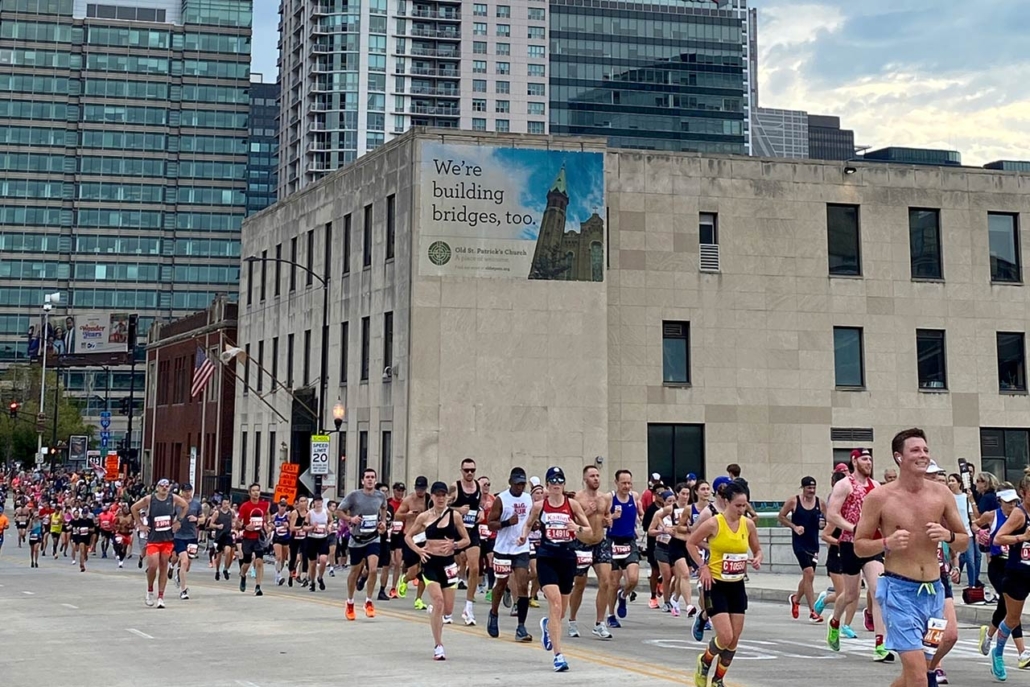
Bank of America Chicago Marathon runners race down Monroe Street after leaving the downtown loop

Along with the Berlin, Boston, London, New York City, and Tokyo marathons, the Chicago Marathon  is one of the world’s six major marathons,  their website proudly proclaims. And it’s taking place in Grant Park this weekend, Sunday, October 8, where an estimated 1.7 million spectators will cheer on 45,000 runners. 

In the Beginning… 

The very first Chicago Marathon was run on Saturday, September 23, 1905, according to Enduropacks.com. Sponsored by the newly-formed Illinois Athletic Club, the race was 25 miles long, In 1905, 20 runners registered for the first Chicago Marathon, 15 actually started the race, and 7 finished. The race began in Evanston and finished in front of a standing-room-only, paying crowd at Washington Park race track, according to the Chicago Tribune. In a stunning upset, according to the blog, a reported 100,000 or more spectators watched Rhud Metzner come from behind to steal a late-race victory from the favored Louis Marks.According to the book Chicago Marathon, Marks collapsed, but got up and finished the race. 

The Chicago Tribune also pointed out that the Marathon wouldn’t grow to 26.2 miles until after the 1908 London Olympics.

And, according to Wikipedia sources, the Chicago Marathon has never excluded women, unlike other cities. Historically, however, Wikipedia notes, the women’s field has been smaller than the men’s. This seems to be the result of older age categories having large multiples of men to women, but the women are beginning to outnumber the men in the 20s age group of the field.

The Modern Era- 1977 to Present 

Annual Chicago marathons were held from 1905 to the 1920s, the later runs sponsored by the Chicago Daily News, but spent the next several decades in limbo.

It was not until the health consciousness of the 1960s, according to Wikipedia sources, that marathon growth gained traction. Frank Shorter’s 1972  Olympic marathon victory represented the convergence of many middle-class American ideals. Then the 1976 New York City Marathon, which was the first New York City Marathon to embrace the five borough course, popularized the big city marathon.

As the ‘Second City,’ Chicago wasn’t far behind New York. The modern era Chicago Marathon, according to Wikipedia sources, was founded over the objection of Ed Kelly, Chicago Park District Superintendent who refused permission to run in the parks or along the Lake Michigan lakefront. With the help of Lee Flaherty, the event’s founder, Mayor Richard J. Daley’s support for the marathon was enlisted. Although Mayor Daley died, his successor Michael Bilandic, a runner himself, approved the race and got Kelly on board. the first marathon on September 25, 1977 and called the Mayor Daley Marathon, with 4,200 participants. Britain’s Steve Jones recorded Chicago’s first-ever world record in 1984.

Carey Pinkowski took over as Chicago Marathon director in the 1990’s, when only a few thousand runners participated, according to a Chicago Tribune profile. At that time, he recalled, he would sweep the course himself the morning of the race — and even hand out race bibs to last-minute runners.

“Very early on, I saw the Boston Marathon and the tradition and New York with its urban experience,” he told the Chicago Tribune. “(Fred Lebow, co-founder of the New York City Marathon) was saying, ‘You’re going to see events with 30,000-50,000 people. People are going to discover this activity.”

In 1990, the Chicago Tribune noted in Pinkowksi’s first year at the helm, 6,168 runners finished. As his biography notes, over 30-plus years, the Marathon grew to a record 45,932 finishers in 2019, including runners from all 50 states and more than 130 countries. He and his team did this by building the marathon’s relationships with the city, the corporate community and the local neighborhoods along the course. They also introduced charity runs and Paralympic marathons. 

The event began attracting elite runners in the mid-80’s, as prize money and prestige grew. Four of the Chicago Marathon’s five world records have been set during Pinkowski’s time: Morocco’s Khalid Khannouchi (1999), Kenya’s Catherine Ndereba (2001), Great Britain’s Paula Radcliffe (2002) and Kenya’s Brigid Kosgei (2019). 

Present Day: Parallels to the past 

This Sunday, runners will wake up, stretch, and have the same dream that runners did in 1905: to reach the finish line, no matter what it takes. 

According to Runtri.com, like the 1905 inaugural race, today’s Chicago Marathon route is an unparalleled city showcase, passing Millennium Park, the Loop, Lincoln Park Zoo, Lake Shore Drive, the Lyric Opera House, The Mercantile Exchange, Greek Town, Chinatown and finally, the Grant Park finish area.

Along the way, three of the city’s main stadiums are near the course’s turning points: Wrigley Field to the north; the United Center to the west; and Guaranteed Rate Field to the south. The city’s fourth professional stadium, Soldier Field, is located near the start/finish area.

The loop course starts and ends at Grant Park. For more about Sunday’s Chicago Marathon, click here

Alison Moran-Powers and Dean’s Team Chicago

Restaurant Review: West Loop’s Elske gives a lot of love-Danish-style

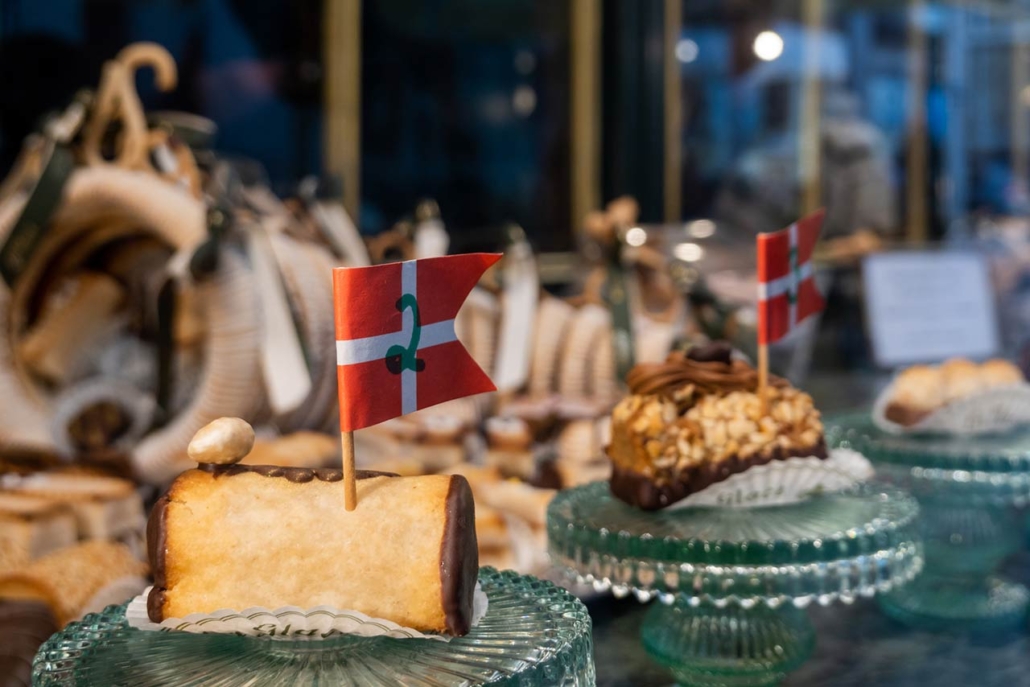
A window of a patisserie with Danish baked goods

Centering on “simplistic fare, seasonal ingredients, and energetic hospitality,” Elske is the Danish creation of two decorated husband and wife chefs. With Elske, David and Anna Posey earned a Michelin Star from 2018-2022, and a James Beard Award for Best Chefs of the Year in 2020.

Scandinavian cuisine is tough to get right. One highly recognizable characteristic of Scandinavian food, according to Kamikoto.com is their preference for cooking methods such as preserving, drying, smoking, salting and pickling. In Denmark, the emphasis is on open-faced sandwiches, with an array of toppings such as smoked fish, cheese, fresh salad items, boiled potatoes and cured meats.

Elske, which means “to love,” in Danish, kicks it up a notch, serving a $125 set menu featuring a smorgasbord of fresh and smoked flavors, including:

  • Skordalia with currants and cipollini onions on rugbrø
  • Tempura Shrimp with sesame leaf
  • Cured fluke with kohlrabi, summer apples, and mustard
  • Smoked fjord trout with cabbage, sourdough, and dill
  • Duck liver tart with salted ramp and toasted buckwheat
  • Grilled lamb loin and sausage with dried fruits and fennel
  • Frozen anise jelly with mint
  • Æbleskiver with roasted cherries, marcona almond, and cherry pit

Or, you can try ala carte selections such as Frikadeller with cornbread porridge, pickled green tomato, and nasturtium, or a Grilled Pork Collar with carrots, chopped pickles, and coriander, a Koji Marinated Chicken with summer squash, ‘salsa macha’, and basil. 

Desserts should be savored, as Anna, the 2018 Jean Banchet Award winner for Pastry Chef of the Year, is bound to create a subtle mix of flavors in desserts such as Lemon Verbena Tapioca with watermelon, Strawberry and Buttermilk Panna Cotta with nasturtium and spices, or her Sunflower Seed Parfait with sour honey, licorice, and bee pollen (from their own rooftop bee hive.)

Reviews were mostly spectacular. 

One Google reviewer wrote, “Such a good experience overall, loved everything about it. They made the tasting menu vegetarian for my wife and I didn’t expect that and it was great. I’ll say I’m not a fan of the fish dishes but maybe that’s just me.”

Open Table was even more impressed. “Elske is perfection. From the moment we arrived, until the one we, sadly, had to leave, everything just clicked. The outdoor fireplace is such a beautiful touch, and it’s great to relax before, or after, (or both) dinner and enjoy the space. We didn’t mention we were celebrating a special occasion, but, the staff picked up on it, and helped us celebrate. The food, ambiance and staff are all exceptional.”

Elske is located at 1350 W. Randolph Street. Their hours are Sunday, Wednesday, and Thursday, 5:30pm–9pm, and Friday and Saturday 5:30pm–9:45pm.  They are closed Mondays and Tuesdays. For more information and reservations, click here

Alison Moran-Powers and Dean’s Team Chicago

Chicago Home and Lifestyles – Inflammation triggers in your diet

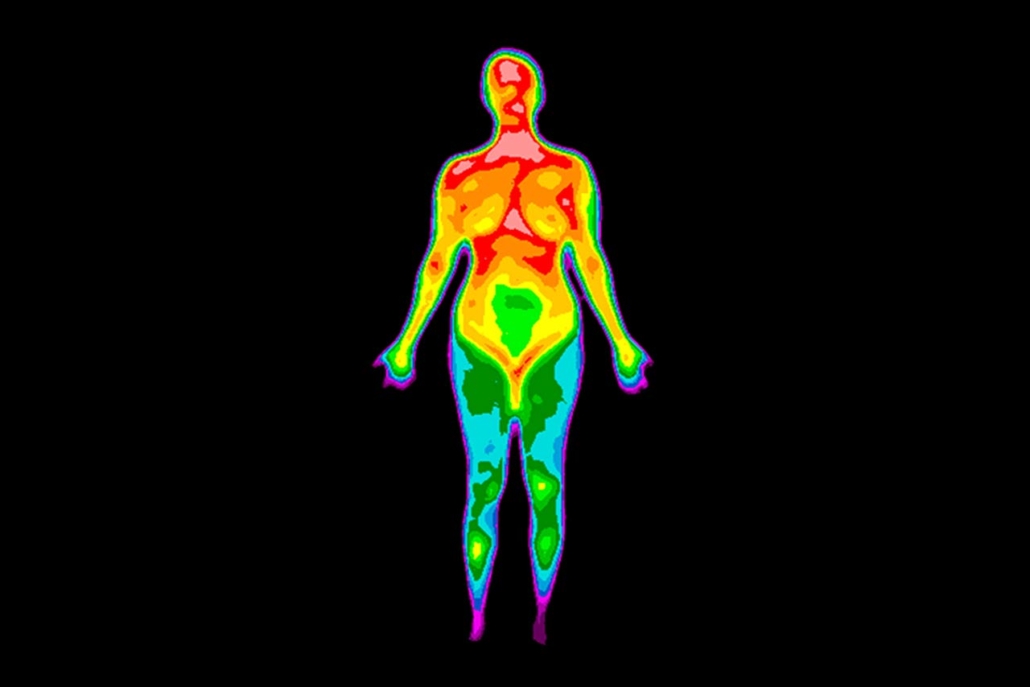
Thermographic image of front of whole body of a woman with photo showing different temperatures in a range of colors

More than 23 million Americans, including myself, suffer from autoimmune conditions. These are conditions where your immune system is inhibited and is unable to decipher what is safe and what is dangerous. The immune system then attacks healthy cells and tissues thinking they are threatening. My condition is rheumatoid arthritis and here my immune system attacks and deteriorates the cartilage in my joints. Others include Crohn’s disease, multiple sclerosis, celiac disease, type 1 diabetes, lupus, psoriasis and inflammatory bowel disease, among others. 

Research into these diseases hasn’t yet found a cause or a cure, but these diseases will grow chronically worse as we age. Some research has concluded that these autoimmune diseases result from interactions between genetic and environmental factors. Many of these diseases tend to occur in families. My paternal grandmother suffered from rheumatoid arthritis also. But just having the gene doesn’t predispose you to develop the disease. There needs to be an outside trigger. Known triggers include environmental toxins, infections, unknown allergens, stress, and even lack of sleep. These conditions are always present but do tend to flare and cause tremendous pain and fatigue. 

Studies are suggesting that a healthy lifestyle can help limit the number of flares as well as their severity. Maintaining a healthy weight, sleeping regularly, and controlling stress can keep your immune system balanced and reduce flares. Diet is one of the most important areas to concentrate on. Nutrition, the gut mucosal immune system, the intestinal microbiota, and autoimmune pathology are deeply intwined. What we eat and the health of our digestive systems are directly connected to our autoimmune system. 70% of our immune system resides in our gut so it’s important to pay attention to what you put in there. Not just avoiding inflammation causing foods but adding pre and probiotics, and bone broth to build healthy bacteria.

Avoid these foods that cause inflammation:

Sugar

Refined carbs

Trans-fats

Omega 6 fatty acids

Processed foods and meats

Alcohol and caffeine

Artificial sweeteners

Food dyes

These foods reduce inflammation:

Fruits, especially berries

Omega 3 fatty acids, found in fatty fish like salmon and tuna

Leafy greens

Olive oil

Spices like cumin and turmeric, also garlic

Seeds and nuts

Avocados

Following the Mediterranean diet with all the above, along with exercise and sufficient sleep can help lower your inflammation and help with your disorder. Make sure to consult with a doctor specializing in your condition. There are medications called biologics that are reducing the progression of many of these diseases.  

Kathleen Weaver-Zech and Dean’s Team Chicago