
Neighborhood News: Chinatown, Lunar New Year, and its historic impact on Chicago
Happy Lunar New Year on Tuesday, February 17! It’s the Year of the Horse, signifying a period of “high energy, ambition, and rapid change.”
Chicago’s Chinatown, on South Wentworth Avenue between Cermak Road and West 26th Street, will be celebrating!
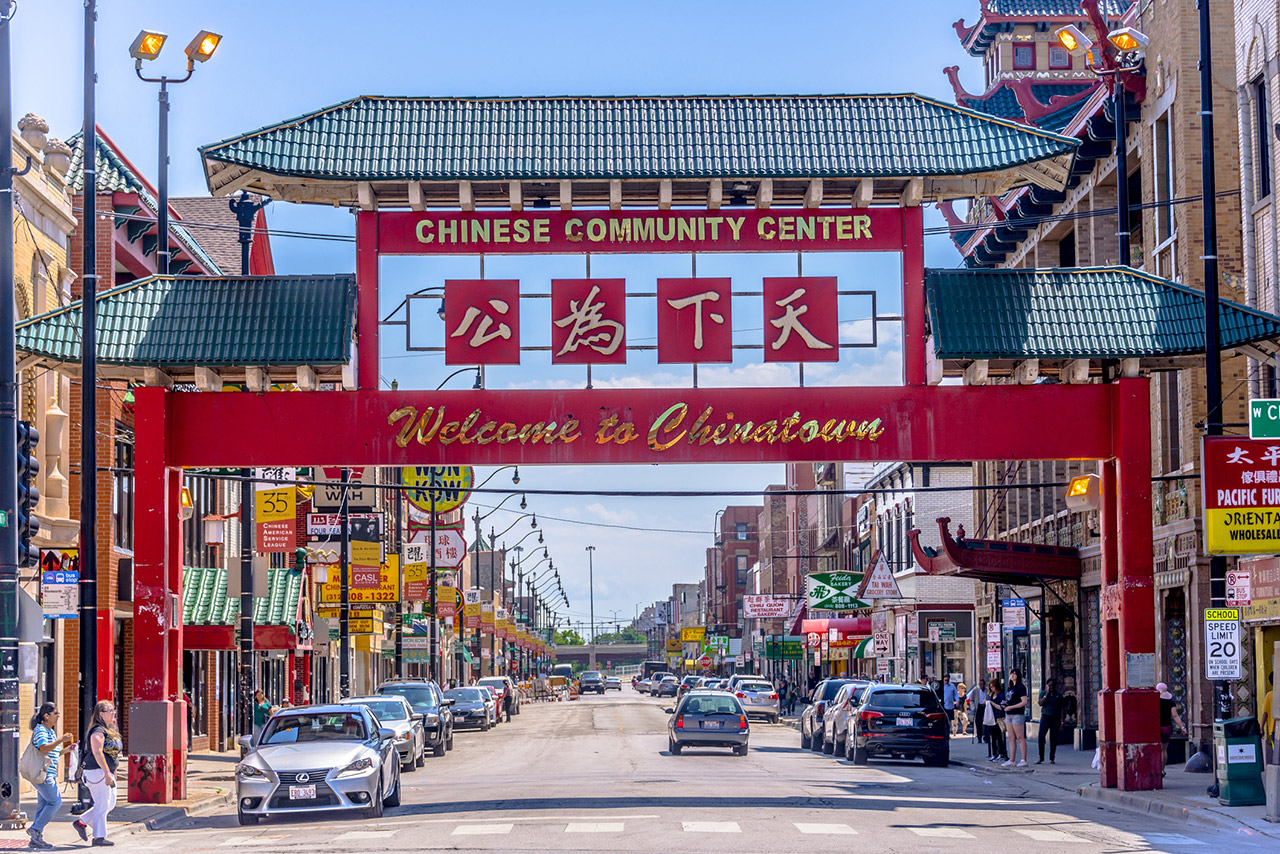
Chinatown is a vibrant community, known for its distinctive, ornate Chinatown Gate at West Cermak Road & Wentworth Avenue, and its Nine Dragon Wall, 170 W. Cermak Road, modeled after the wall in Beihai Park in Beijing. Over a third of Chicago’s Chinese population resides in Chinatown, making it one of the largest concentrations of Chinese-Americans in the United States. The area is home to bustling small businesses, authentic restaurants and spectacular parks maintained by the Chicago Park District.
History of Chinatown
According to Wikipedia sources, Chinese men and women first came to Chicago around 1869, following the completion of the first transcontinental railroad. They were escaping anti-Chinese violence that had broken out on the West Coast.
By the late 1800s, 25% of Chicago’s 600 Chinese residents settled along Clark Street between Van Buren and Harrison Streets. In the mid-1870s, the Kim Kee Company opened a store selling imported Chinese goods and ingredients, and in the basement of the same building stood a Chinese-owned restaurant.
Racism and a Move Southward
While Chinese people in Chicago had been relatively welcomed by the locals in the past, the renewal of the Chinese Exclusion Act in 1892, in tandem with the World’s Columbian Exposition in Chicago in 1893, escalated anti-Chinese sentiment.
As Wikipedia tells it, by the turn of the century, numerous powerful clans and family associations rose up among the Chinese population in Chicago and led the resistance.
The first and most powerful was the Moy clan, who were the de facto leaders of the Chinese people in Chicago from 1898 to 1940. The Moy Family Association came to be the largest association in the city. The Moy Association Building, originally built in 1928, still stands as one of the more impressive and beautiful buildings in Chinatown.
Following the 1906 San Francisco earthquake, Chinese Americans arrived in Chicago in droves.
In 1912, Chinese people living in this area began moving south to Armour Square, fueled by anti-Chinese sentiment along the Clark Street.
Despite that, economically, by the 1930s, a large portion of Chinese businesses in the new Chinatown were large grocery stores stocking imported goods. Through transnational associations, these initial Chinese-owned stores substantiated a strong link between Chicago’s Chinatown, other Chinatowns in the United States, and East Asia.
Before World War II, Chicago’s Chinatown remained a largely insulated enclave. The influx of refugees and educated Chinese people into Chicago dramatically changed the importance of Chinatown to Chicago’s Chinese residents.
Further, as Chinese immigration came to be more accepted following the passing of the Immigration and Nationality Act of 1965, young, educated Chinese Americans began to take a greater role in Chinatown.
The young immigrants also built bridges to the Greater Chicago area through the Chinatown Gateway, built in 1975, which encouraged visitors to learn more about the neighborhood and Chinese culture, as well as history more broadly.
In the decades that followed, Chinatown’s business and civic leaders built an extensive roster of shops, cafes, dim sum spots and teahouses, as well as creating lasting business and cultural associations, making it a destination for tourists and staycationers alike.
Civic Leadership Spurs Development, Cultural Appreciation
Chinatown’s most noted civic leader of the latter 20th Century was Ping Tom (1935-1995). A lifelong resident of Chinatown, Ping Tom formed the Chinese American Development Corporation in 1984. The private real estate firm transformed a 32-acre rail yard site into Chinatown Square, a $100 million dollar residential and commercial expansion of Chinatown. The two-level mall consists of restaurants, beauty salons and law offices, flanked by 21 new townhouses. Today, Ping Tom Memorial Park, 1700 S. Wentworth Avenue, honors his memory and continues his appreciation of Chinese-American culture.
For a deeper dive into the often fractured, ultimately triumphant history of Chinatown, the Chinese American Museum of Chicago (CAMOC), 238 West 23rd Street, is a great resource for the appreciation of Chinese American culture through exhibitions, education, and research. It preserves the past, present, and shines a light into the future of Midwestern Chinese Americans.
Event: Lunar New Year Celebration
Chinatown’s Lunar New Year parade will take place on Sunday, March 1. Traditional dragon and lion dancing teams, colorful floats, marching bands and marching groups will begin at 1pm at 24th Street and Wentworth Avenue and travel north on Wentworth towards the viewing stand at Cermak and Wentworth.
Prior to the Chinatown parade, Gangnam Market in River West is holding its annual Lunar New Year Celebration from Saturday, February 14–Sunday, February 15.
The celebration runs from 8am– 11pm each day with free Asian food options like candied fruit skewers or “Tanghulu” along with beverages, plus beer and wine samples from market vendors.
Lion dancing and drum performances will take place each day between 2pm and 4pm, and roaming Pokémon characters will be available for photo ops.
新年好!
Happy New Year to all!
Alison Moran-Powers and Dean’s Team Chicago


