
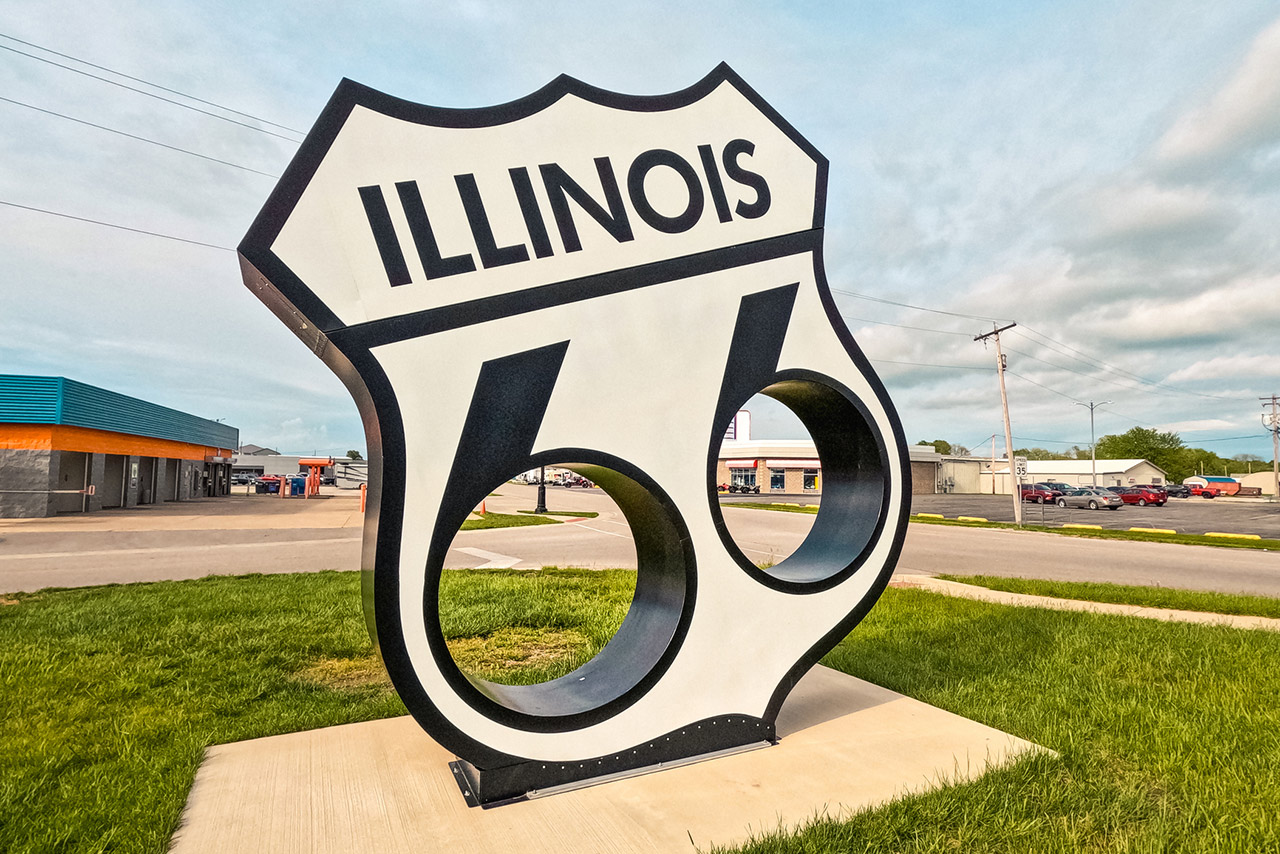
Neighborhood News: From Navy Pier to Santa Monica, kicks aplenty on Route 66!
“Get your kicks on Route 66!”
Bobby Troup, songwriter, 1946
Call it the “Mother Road,” “America’s Main Street,” or just plain “Route 66.” The celebrated pathway to adventure marked its 100th birthday last month by moving its starting point to Navy Pier, 600 E. Grand Avenue, after 71 years at the intersection of Adams Street and Michigan Avenue (by the Art Institute of Chicago.)
As Choose Chicago notes, the new starting point created an eight-state “pier-to-pier” connection with Santa Monica Pier in California, the official end point of the route.
For many decades, Route 66 has been immortalized in song, a television show, and ingrained in our imagination as an escape, an adventure, and most importantly, our gateway to the West.
But it reality, it’s a 2,400-mile road, stretching from Chicago to Santa Monica, a premier diagonal artery connecting the Midwest to the Pacific. It crosses extreme weather conditions, offers a plethora of road surfaces, and a panorama of Americana not seen anywhere else in the world.
Why is Route 66 famous?
In the early days of transportation, Route 66, according to CruiseAmerica.com, was one of the first highways to connect the Eastern United States to the West Coast, shaping American travel, migration, and culture for nearly half a century.
Route 66 was the brainchild of Oklahoma businessman Cyrus Avery, called “The Father of Route 66.” According to the US Department of Transportation, Avery promoted the idea of bringing prosperity to Tulsa and other points west. Unlike the straight Lincoln Highway, Route 66 did not follow a linear course. Its diagonal course linked hundreds of rural communities from Chicago to Kansas and on to Los Angeles, enabling farmers to transport grain and produce.
By the 1930s the trucking industry was using Route 66. The truckers enjoyed the easier drive across the prairie lands and milder climates than the northern routes offered. Additionally, people affected by the Dust Bowl fled to the West in search of greener pastures
In 1940, John Steinbeck dubbed it the “Mother Road” in his epic novel “The Grapes of Wrath.”
During World War II, as the New York Times mentioned, the highway carried westbound military troops and equipment, and in the postwar years it beckoned to a newly prosperous traveling public.
During the segregation era, African American travelers used the “Negro Motorist Green Book” to navigate around “sundown towns” where they were unwelcome.
With all this attention plus the popularity of the automobile, restaurants, souvenir shops and auto camps sprung up, according to Cruise America. Landmarks of all kinds were built and the road was at its peak of popularity. Post-Depression and post-world War II families, equipped with jobs, money and an automobile, planned cross-country road trips via Route 66 to see all the sites.
In 1985, Route 66 was officially removed from the federal highway system after being replaced by the Interstate Highway System. As the New York Times said, although Route 66 is no longer an official U.S. highway — it was eventually left in the dust by the interstate system — the road has gained traction in the popular imagination and has become a draw for national and international tourism.
Today: Getting Your Kicks…
Cruise America suggests that your first Route 66-themed stop should be in Pontiac, Illinois, “a small community with a huge passion for preserving the “Mother Road.” Murals brighten nearly every block, and the Route 66 Hall of Fame & Museum gives you your first big dose of roadside nostalgia — neon signs, vintage cars, and legends of the highway.
Next stop should be Springfield, the seat of Illinois government, Abraham Lincoln’s hometown, and a place deeply rooted in American history. Tour the Lincoln Home National Historic Site (listed on the National Register of Historic Places), the Old State Capitol, and the Abraham Lincoln Presidential Library & Museum.
The blogsite suggest breakfast at Charlie Parker’s Diner, which reportedly serves hubcap-sized pancakes and “horseshoe” sandwiches inside a vintage Quonset hut. “The vibe is laid-back, and the food is unforgettable — the perfect boost before heading south toward St. Louis,” they say.
Just west of Stanton, Missouri lies Meramec Caverns, one of Route 66’s most iconic attractions. Known as the hideout of outlaw Jesse James, this vast cave system invites you to wander through towering limestone formations lit in brilliant colors. It’s also home to The Stage Curtain, a 70-foot natural calcite drape.
After traveling through Oklahoma, Texas, and New Mexico, you’ll “Roll into the End of the Mother Road” at the Route 66 ‘End of the Trail’ Sign at Santa Monica Pier. Drive onto Ocean Avenue, breathe in the salty air, and look ahead… the shimmering Pacific awaits!
For more information about Route 66 travels, click here.
Alison Moran-Powers and Dean’s Team Chicago