Neighborhood News: Views from the Top at McCormick Bridgehouse & Chicago River Museum
At Chicago’s only vertical museum, imagine being surrounded by 360-degree views of the great Chicago River and Lake Michigan from the top of an historic Bridgehouse! The vista would be amazing, and the kids would be dazzled!
Operated by the Friends of the Chicago River, McCormick Bridgehouse & Chicago River Museum, 99 Chicago Riverwalk, provides a one-of-a-kind opportunity to explore a historic landmark bridgehouse. Beginning at river level and spiraling five stories up, visitors can view the massive gears of Chicago’s most famous movable bridge and journey through time as they experience the story of the Chicago River.
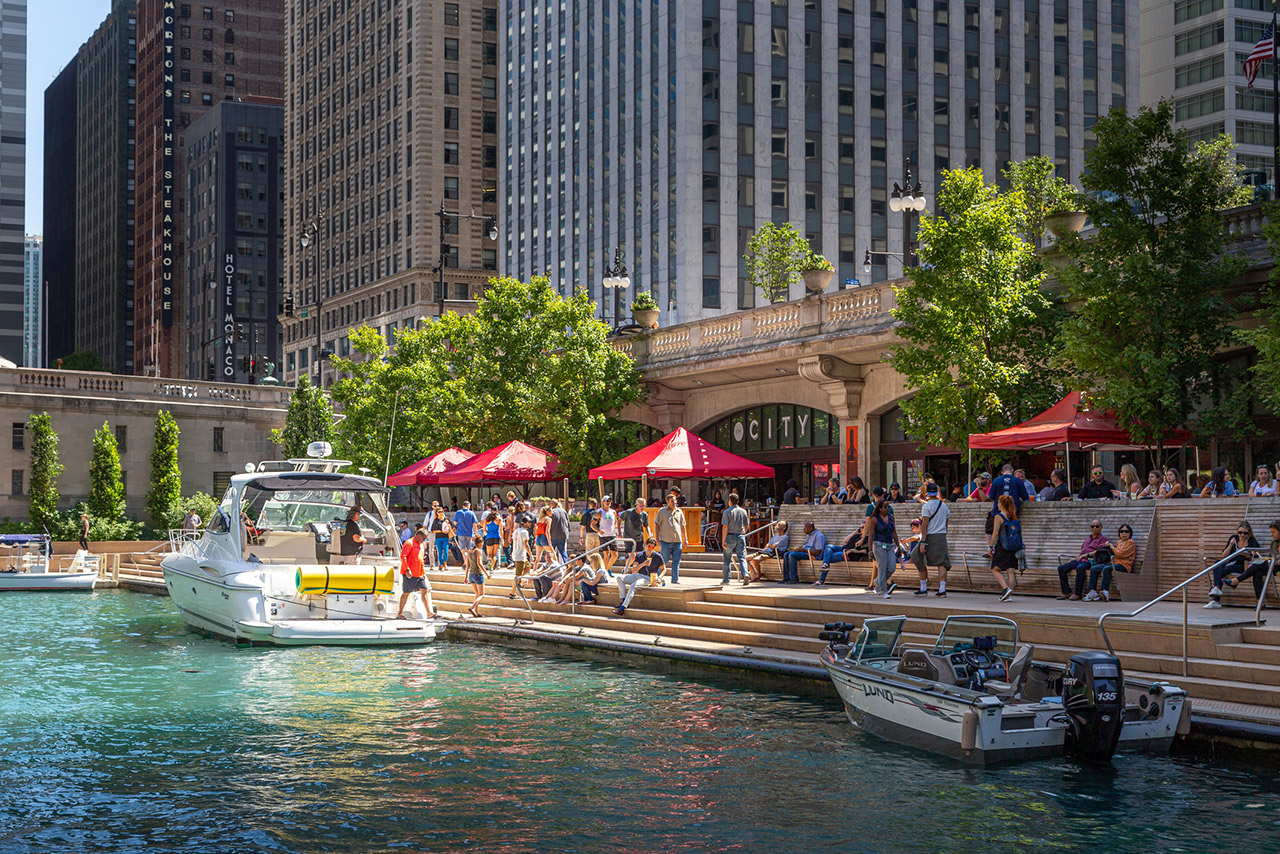
The Bridgehouse Museum is the cultural anchor of the Chicago Riverwalk, a linear park along the south bank of the Chicago River’s Main Stem.
As their website notes, the five-story museum takes visitors on a bottom-up journey through Chicago’s history. The landmark bridgehouse is alive with stories of the past, details of the bridge and vivid stories about the many people inspired by the potential of the Chicago River, and is divided into these primary exhibit areas:
Level 1 (Gear Room): Provides a behind-the-scenes look at the massive 1920s mechanical gears that operate the bascule bridge.
Levels 2 to 5: Focuses on the history, pollution, and recent ecological renaissance of the Chicago River, as well as pre-European settlements.
History of Chicago’s Bridges: Learn about bridge design and engineering—including the famous “Chicago-type” trunnion bascule bridge—and view historic artifacts documenting how the city’s river crossings evolved.
The River’s Renaissance: Discover the history of the river, from its pollution and the reversal of its flow to protect drinking water, to modern conservation and wildlife recovery efforts.
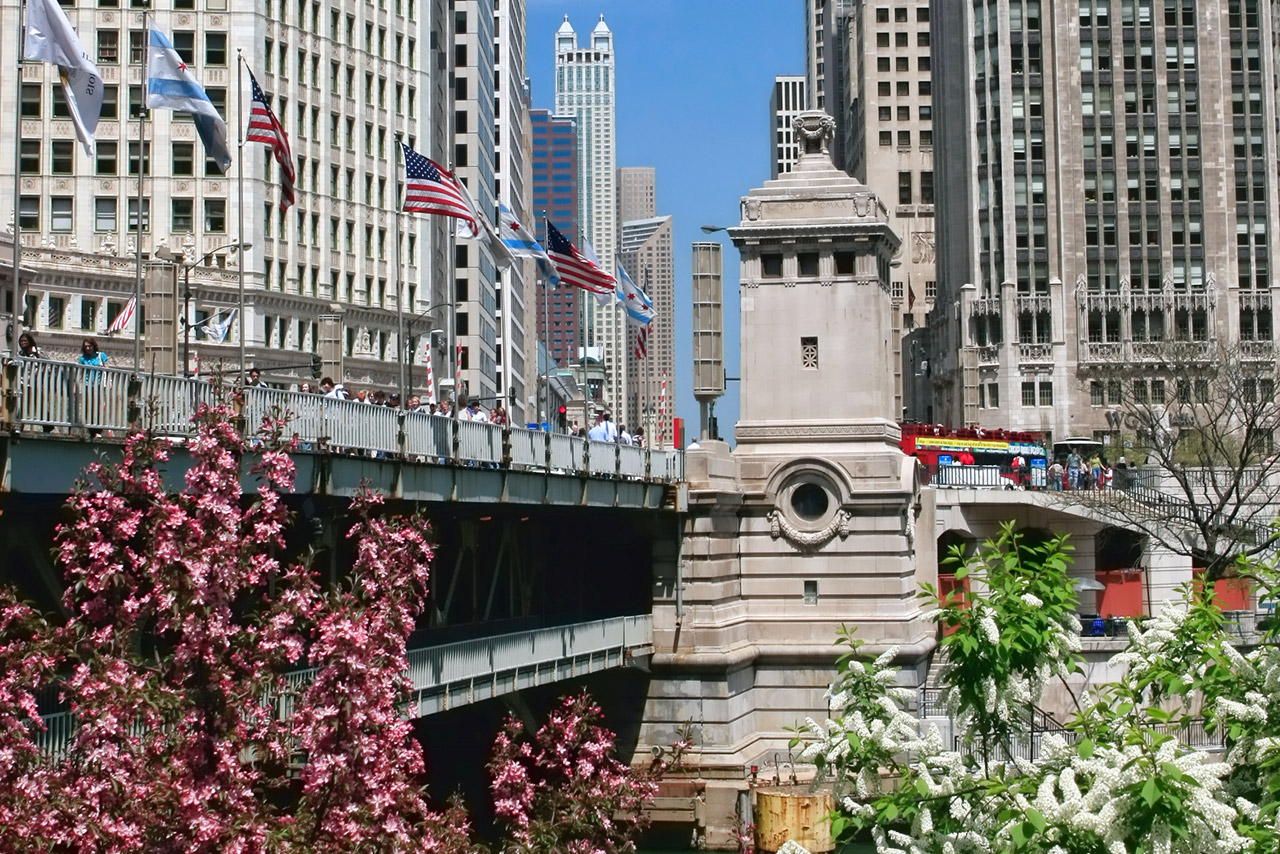
City of Bridges: Explore the history of the Michigan Avenue Bridge itself and view the ornamental Beaux-Arts bas-relief sculptures on the bridgehouse exteriors.
At the top of the Bridgehouse, visitors are treated to magnificent 360 degree views of the city and river, and will gain a whole new perspective on the beauty and complexity that is Chicago.
History
Once a meandering prairie stream, the Chicago River was straightened, dredged, channelized and re-engineered to meet the needs of the growing metropolitan region. The Main Stem was deepened to support a robust shipping industry and bridges were built to accommodate the bustling city.
Designed as a gateway between Chicago’s North Side and South Side, the Michigan Avenue Bridge, at the corner of Michigan and Wacker, was the first double-deck, double-leaf, fixed trunnion bascule bridge ever built. The bridge was first conceived by architect Daniel Burnham in his 1909 “Plan of Chicago.”
Edward Bennett designed the bridge and its four bridgehouses following the Beaux-Arts style and in keeping with Burnham’s concept. Engineers Hugh E. Young, Thomas Pihlfeldt and William A. Mulcahy were instrumental in its construction, which began in 1918.
As their website says, in the 1920s, the Michigan Avenue Bridge would lift more than 3,000 times a year. Today, it lifts approximately 40 times a year.
The bridge was opened for traffic in 1920, and the final ornamental touch was added in 1928, when bas-relief sculptures depicting scenes from Chicago history were installed. The Bridgehouse Museum is adorned by the sculpture titled ‘Defense’ by Henry Hering, depicting a scene from the 1812 Battle of Fort Dearborn. The southern end of the bridge neighbors the original Fort Dearborn site.
The Michigan Avenue Bridge became a much-used connection between Chicago’s north and south, just like Burnham had envisioned. Today, thousands of people traverse the bridge daily. The bridge, along with its bridgehouses, was designated a Chicago Landmark in 1991 by the City of Chicago and the State of Illinois. In 2010, the bridge was officially renamed DuSable Bridge in honor of Chicago’s first permanent resident, Jean Baptiste Point DuSable, whose homesite abuts the northern end of the bridge.
Today: Bridge-ing the past and future
Operated by the Friends of the Chicago River, the Bridgehouse Museum stands as the cultural anchor of the Chicago Riverwalk and welcomes tens of thousands of visitors every summer.
Opened in 2006 to provide new access and understanding of the dynamic relationship between Chicago and its river, the museum is now open for their 20th season. Hours of operation are Wednesday through Sunday, 10am – 5pm. Guided Tours are now booking for June through October. On select bridge lift dates, in the fall of 2026, visitors can view the bridgeworks in motion at the Bridgehouse Museum.
Suggested donations are $8 per person. If you would like to schedule a group visit/field trip, inquire about a rental, or have any other questions please contact Josh Coles, Museum Director, at jcoles@chicagoriver.org or 312-939-0490 ext. 28. For more information, click here.
Alison Moran-Powers and Dean’s Team Chicago